

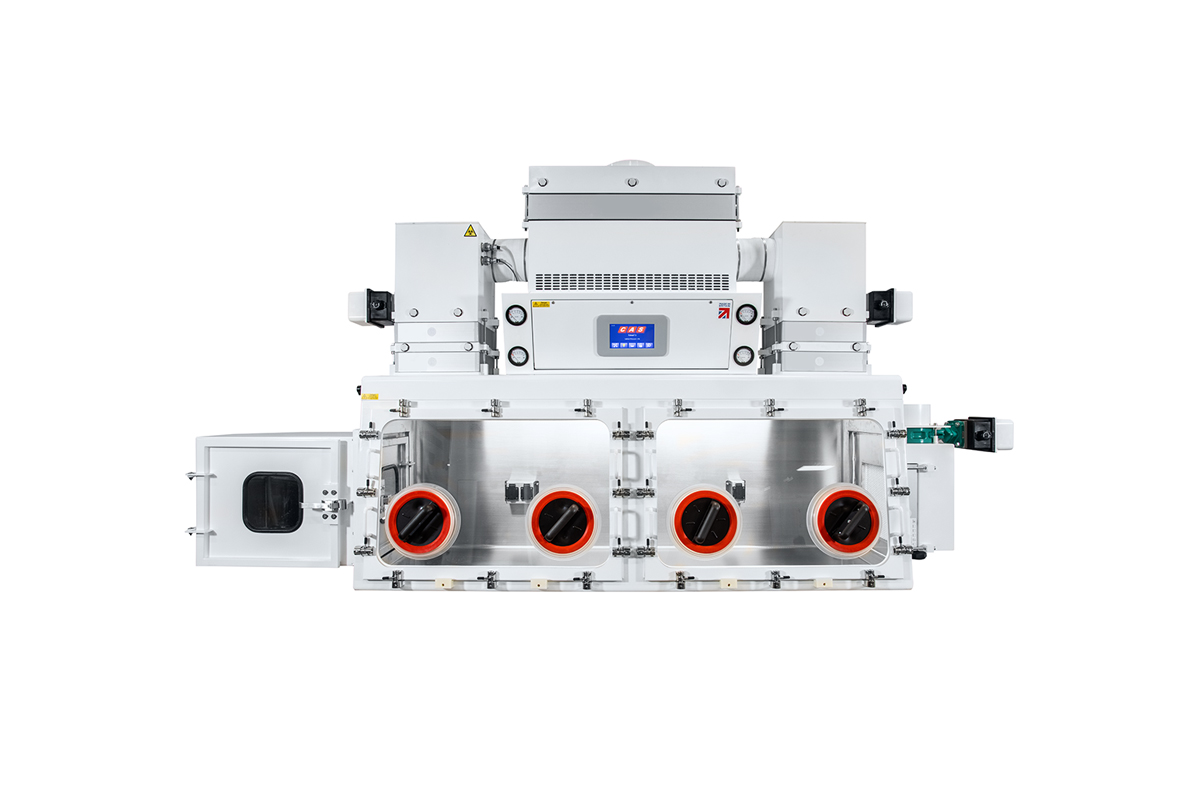

What is a Biological Safety Cabinet (BSC)?
Types, Uses & Why They Matter in Modern Labs
Laboratory environments, particularly in clinical, pharmaceutical, and research settings, present significant risks when handling biological agents, hazardous substances, and sensitive materials. Without robust containment measures such as Biological Safety Cabinets, the threat of exposure to infectious agents, cross-contamination, or failure to meet compliance standards can compromise both personnel safety and research integrity.
To mitigate these risks, laboratories rely on a combination of best-practice protocols and high-performance equipment. At the centre of many biosafety strategies is the use of Biological Safety Cabinets (BSCs), also known as Microbiological Safety Cabinets (MSCs) or Biosafety Cabinets. These cabinets create clean, contained environments that enable sensitive work to be carried out safely, even during potentially hazardous procedures.
The Need for Containment in Laboratories
Laboratory procedures often generate aerosols and microparticles, tiny, airborne contaminants that can carry infectious agents invisible to the naked eye. Without effective containment, these particles can spread quickly, leading to laboratory-acquired infections, environmental contamination, and compromised experimental outcomes. This makes Biological Safety Cabinets (BSCs) a critical line of defence in maintaining biosafety and protecting both people and research.
Inadequate containment doesn’t just pose a health risk, it can also impact compliance with industry standards such as BS EN 12469, ISO 14644, or GLP/GMP protocols, depending on the application. Reputational damage, research delays, and even financial penalties may follow if contamination issues arise.
That’s why modern laboratories turn to high-quality containment solutions such as the BSCs developed by Contained Air Solutions. Engineered to meet the complex safety and performance requirements of today’s scientific environments, our cabinets feature advanced airflow systems, HEPA filtration, and ergonomic design, helping to reduce contamination risk, boost productivity, and ensure compliance with national and international standards.
The Science Behind Biological Safety Cabinets
Biological Safety Cabinets (BSCs) are essential tools in laboratories, providing vital protection to personnel, the environment, and research materials. They work by combining physical barriers, controlled airflow, and HEPA filtration to prevent hazardous agents from escaping or entering the workspace.
How BSCs Protect You and Your Environment
- Airflow Containment: BSCs use carefully controlled airflow to create a contained workspace, preventing hazardous agents from escaping or entering the lab environment.
- HEPA Filtration: These filters capture airborne particles, with 99.97% efficiency at 0.3 microns , preventing contaminants from escaping into the laboratory or compromising sample integrity.
- Controlled Airflow Dynamics: The airflow patterns within the BSC ensure harmful substances stay within the cabinet, offering protection to both the operator and the surrounding environment.
Airflow Dynamics
BSCs use carefully designed airflow patterns to create a contained workspace, ensuring that hazardous particles stay within the cabinet and don’t contaminate the laboratory environment:
- Inward Airflow: This creates negative pressure at the cabinet front, preventing harmful agents from escaping into the lab.
- Vertical Laminar Downflow: In Class 2 cabinets, clean air is directed downwards over the work surface, maintaining sterility and reducing cross-contamination.
- Class 3 Airflow: In Class 3 cabinets, airflow is designed to ensure complete containment, with inward airflow creating negative pressure and filtered exhaust air being safely vented outside.
Exhaust Air Management
The exhaust air from BSCs can either be recirculated within the lab or vented outside, depending on the lab’s ventilation system or configuration:
- Recirculating: The filtered exhaust air is recirculated back into the lab, with additional double HEPA filtration to ensure safety.
- Extract Ducted: The filtered exhaust air is vented outside through your building extract system.
Discover a simpler approach to managing your room air handling by combining cabinet and room extract systems. Visit our TriMAT page for more information.
Types of Biological Safety Cabinets
When selecting the right Biological Safety Cabinet (BSC), it’s essential to consider the biological risk level, required containment, and operational needs of the laboratory. BSCs are generally classified into three types, Class 1, 2, and 3, each offering different levels of protection for personnel, products, and the environment.
Contained Air Solutions manufactures a wide range of BSCs, including hybrid models that incorporate advanced features to support laboratories working with a mix of low- and high-risk materials. Here’s a breakdown:
Class 1 Biological Safety Cabinets
These cabinets draw air through the open front and across the work surface, with the exhaust air HEPA-filtered before release. They protect the user and environment, but do not protect the sample.

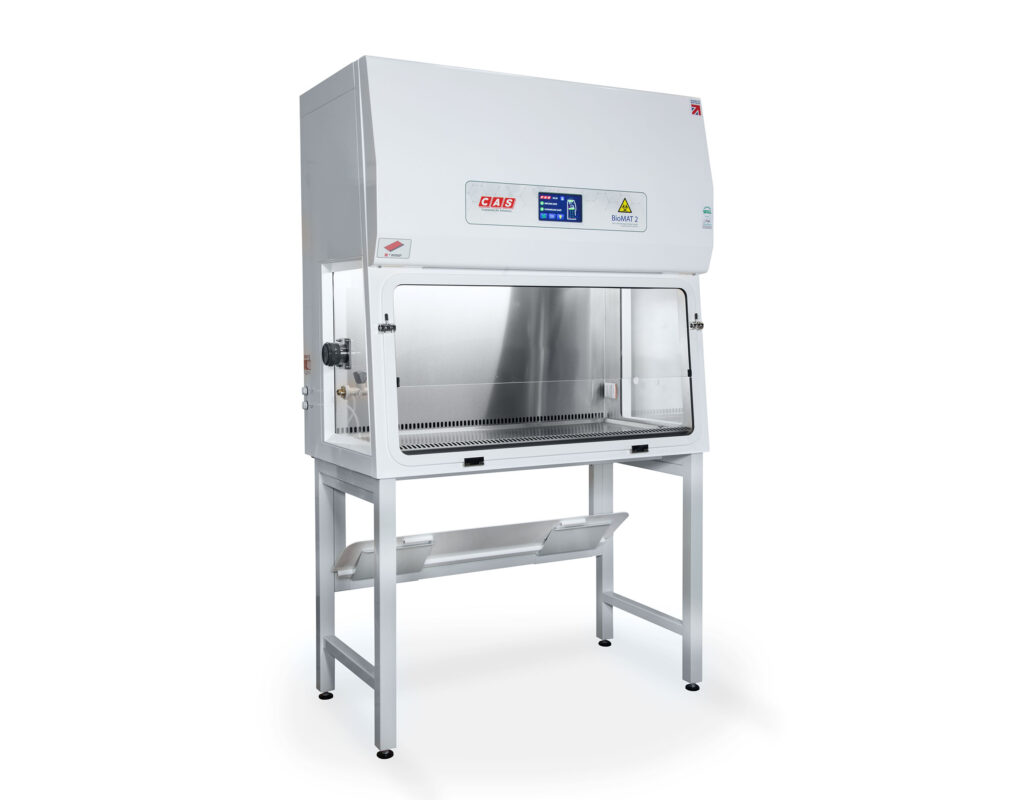
Class 2 Biological Safety Cabinets
The most commonly used type in research and clinical settings, Class 2 cabinets combine inward and downward HEPA-filtered airflow to protect the operator, environment, and sample.
Class 3 Biological Safety Cabinets
These fully enclosed, gas-tight cabinets offer the highest level of containment for handling the most dangerous biological agents (up to Hazard Group 4). They feature HEPA-filtered inflow, and double-filtered exhaust air, with work conducted through sealed glove ports.
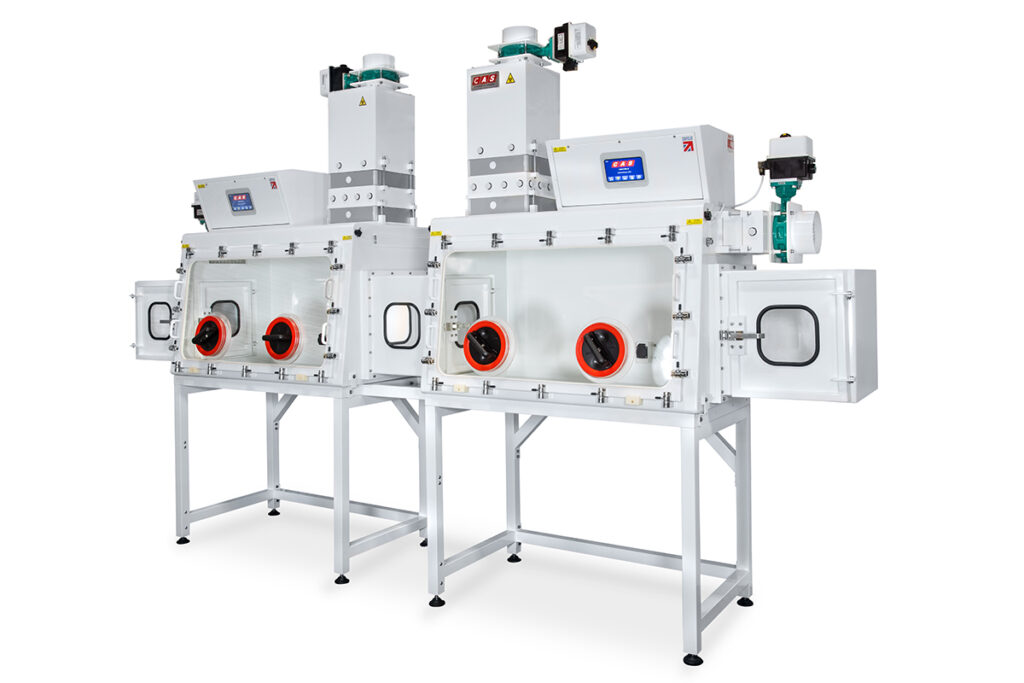
Hybrid Biological Safety Cabinets – Class 1-Hybrid and Class 3/1 Hybrid.
Hybrid Biological Safety Cabinets combine features from Class 1 and Class 3 cabinets, providing flexible containment options in a single unit. These are ideal for labs handling a mix of low- and high-risk materials
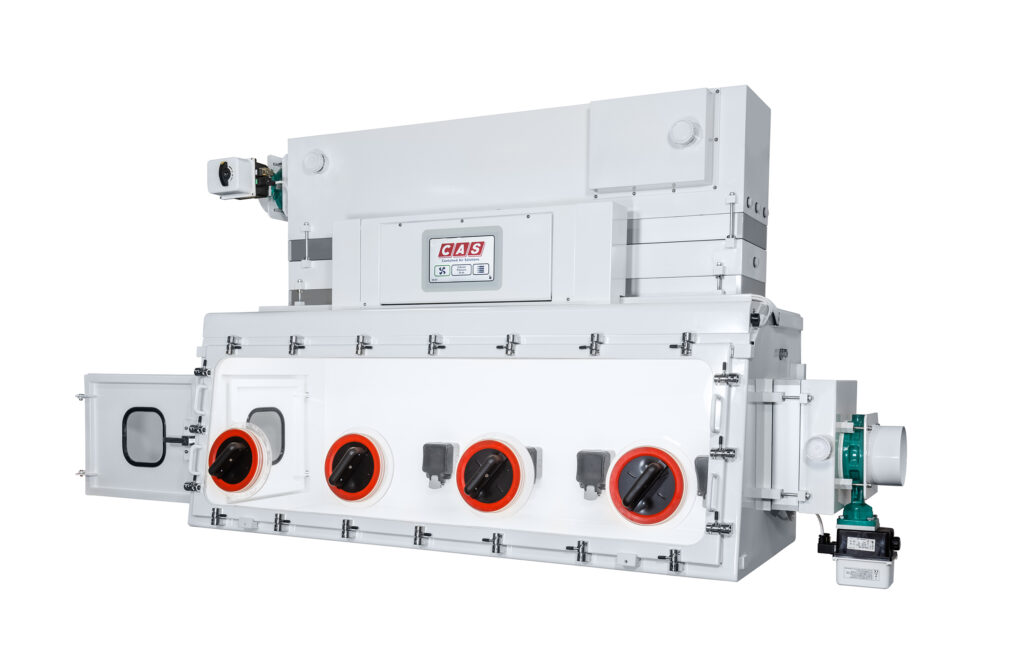
Modern Features for Evolving Lab Needs
Today’s BSCs go far beyond basic containment. At Contained Air Solutions, our cabinets are engineered with cutting-edge technologies that enhance both safety and efficiency:
- Integrated power sockets, sealed service ports, and compressed air outlets for seamless workflow.
- Built-in fumigation connections, closure panels, and automated UV disinfection options to reduce downtime and simplify decontamination.
- Ergonomic designs with armrests, angled front sashes, and integrated storage shelves to support operator comfort during long procedures.
- Energy-efficient airflow systems and smart monitoring to optimise performance while reducing operational costs.
- Advanced innovative technology including touchscreens, real-time status indicators, and BMS/API integration for seamless integration with laboratory management systems and real-time performance tracking.
These innovations reflect the needs of modern laboratories, ensuring that our BSCs are not only safe, but also practical, sustainable, and user-friendly.
More information on the types of Biological Safety Cabinets available at Contained Air Solutions.
Tailoring Your BSC to Your Laboratory
Every laboratory has its own specific requirements, whether defined by the materials being handled, the available workspace, or operational workflows. A one-size-fits-all approach doesn’t always deliver the best results when it comes to biosafety.
At Contained Air Solutions, we specialise in custom-designed containment solutions that align with your exact needs. From bespoke cabinet dimensions and equipment integration to hybrid models capable of supporting multiple containment levels, our solutions are built around your processes-not the other way around
We take a collaborative approach, working closely with clients from the outset to identify the ideal configuration, features, and performance characteristics for your environment. Whether your priority is:
- Enhanced ergonomics for user comfort,
- Seamless integration with lab infrastructure,
- Advanced control systems, or
- Energy-efficient technologies,
Our team ensures that every element is carefully considered and engineered for maximum safety, usability, and efficiency.
Standard clean air and containment solutions don’t always meet the unique requirements of specific environments or processes. That’s why, at Contained Air Solutions, we specialise in tailoring BSCs to your specific needs. Explore some of our custom solutions here.
Best Practices for Safe Use
Proper use and maintenance of Biological Safety Cabinets (BSCs) are essential to ensure both safety and optimal performance. To achieve this, operators must be aware of common mistakes that can compromise the cabinet’s protection.
Avoid Common Mistakes:
- Blocking airflow grills: This can disrupt the flow of air and compromise containment.
- Overloading the work surface: Cluttered surfaces can interfere with airflow and increase contamination risks.
- Improper waste disposal: Incorrect disposal methods can lead to cross-contamination and breach containment protocols.
Additionally, BSCs should be positioned away from airflow disturbances, such as air vents or open doors, that could interfere with their containment capabilities.
For further tips and insights, read more in this article Working Safely in a Biological Safety Cabinet: A Guide to Best Practices
Comprehensive Training and Support:
Operators should undergo thorough training on the specific BSC model in use, including its safety features, airflow dynamics, and performance limitations. At Contained Air Solutions, we offer free operator training for all our products, ensuring that users are fully equipped to operate their BSCs safely and efficiently. Additionally, we provide lifetime product support to assist with any ongoing needs or queries.
Maintenance for Optimal Performance:
Routine maintenance is crucial to ensure the continued efficiency and safety of BSCs. Operators should regularly:
- Monitor performance indicators
- Conduct visual inspections
- Perform airflow measurements
For optimal performance, BSCs should also be serviced by a trained provider at least once a year, with a minimum of every six months when within a category 3 laboratory.
To further support our clients, Contained Air Solutions offers comprehensive service and maintenance plans, ensuring your BSC remains compliant and performs optimally throughout its lifecycle.
Ensure Long-Term Reliability:
By following these best practices, tailoring procedures to your laboratory’s specific needs, and addressing maintenance requirements promptly, operators can ensure the long-term reliability of their BSCs-safeguarding both personnel and samples.
Final thoughts:
Biological safety cabinets are vital components of any comprehensive biosafety strategy. They provide a secure, contamination-free workspace, ensuring both personnel safety and research integrity. Investing in a high-quality BSC not only secures reliable containment but also enhances long-term operational efficiency by reducing contamination risks and supporting smooth workflows.
At Contained Air Solutions, our cabinets are equipped with advanced features that prioritise safety, user comfort, and sustainability. Choosing the right BSC is not just about meeting regulatory requirements, it’s an important investment in your laboratory’s performance. A well-designed, high-quality cabinet will safeguard research, improve productivity, and serve as a long-term sustainable asset for your operations.
Contact the Contained Air Solutions team today to learn more about our Biological Safety Cabinets where you will receive a free consultation and a no-obligation quote.
Other Latest Resources
What is a Laminar Flow Cabinet? L aminar flow cabinets are widely used to create controlled, particle free conditions for sensitive work. One of the [...]

Biosafety Cabinets, Laminar Flow Cabinets, Isolators, Downflow Tables…Which One is Right for Your Lab? With so many options available, biological safety cabinets, laminar flow cabinets, [...]

How to Work Safely in a Biological Safety Cabinet Biological Safety Cabinets (BSCs), also known as Microbiological Safety Cabinets (MSCs) or Biosafety Cabinets, are essential for anyone working [...]
